
If you’re estranged from a parent or family member, you may have been surprised by how often you feel judged for cutting off family. The questions, the comments, the pressure to explain yourself can be just as painful as the relationship you stepped away from. This article is here to ground you. You’ll learn why judgment hits so deeply, how to stop internalizing other people’s opinions, and practical ways to protect your emotional well-being without over-explaining or doubting yourself.
Why Being Judged for Cutting Off Family Hurts So Much
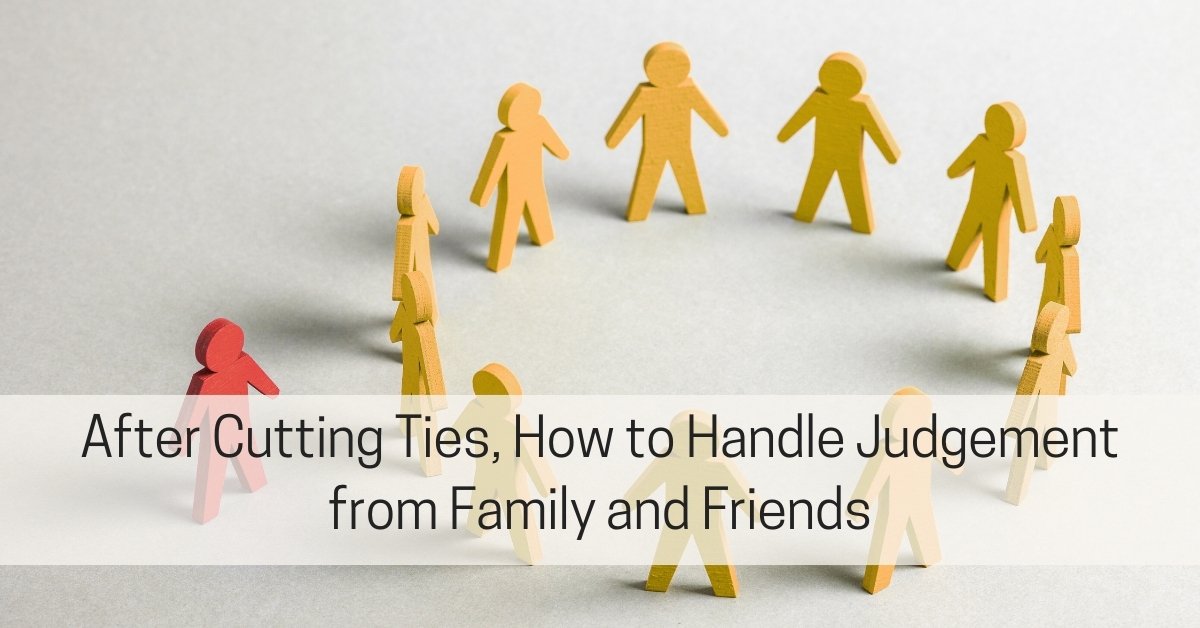
Being judged for cutting off family hurts because it goes against one of the strongest social rules we’re taught: family relationships should be preserved at all costs. When you break that rule, people often react with discomfort or moral certainty rather than curiosity.
For many estranged adult children, this judgment activates old wounds. If you grew up minimizing your needs or being told you were “too sensitive” or “overreacting,” judgment now can quickly turn into shame. Even when you know the estrangement was necessary, your nervous system may still respond as if you’re doing something wrong.
It also hurts because estrangement is rarely impulsive. Most people try for years before stepping away. Being judged can feel like having that long, painful history erased.
This post contains an affiliate link, which means we may earn a small commission if you make a purchase through our links. There is no added cost for you.
Common Reactions When You’re Judged for Cutting Off Family
You’ve probably heard some version of:
- “But they’re your parents.”
- “You’ll regret this when they’re gone.”
- “Family is everything.”
- “Can’t you just forgive and move on?”
Responses such as these say more about the speaker than about you. People who haven’t experienced ongoing emotional harm often struggle to imagine a situation where distance is the healthiest option. They respond to an idealized version of family, not the one you lived in.
When you’re judged for cutting off family, it doesn’t mean your reasons aren’t valid. It means the listener can’t understand them.
The Emotional Toll of Being Judged for Cutting Off Family
As I wrote in Cutting Ties with Your Parents (2024), “Messages like these are not only painful, they invalidate your feelings and experiences and imply or overtly state that you’re a bad person and you’ve done something wrong. They contribute to guilt and shame, which makes it hard to see cutting ties as a healthy choice and move forward.”
When you’re judged for cutting off family, it can slowly undermine your confidence in your decision. Even if you felt clear at first, repeated judgment can trigger self-doubt and feelings of shame.
Judgment from others also contributes to loneliness and isolation. Understandably, you may be reluctant to open up to others, even friends, or seek support because you fear more criticism or pressure to reconcile. Sometimes it feels easier to stay quiet or spend holidays alone than to risk being misunderstood.
Feeling like you have to continually explain or justify your decision to cut ties is exhausting. It keeps you in a defensive position and can drain your emotional energy.
How to Respond to Judgments About Family Estrangement
You are allowed to stop explaining. You are allowed to keep details private. Not everyone deserves access to your story, especially if they’re approaching it with judgment rather than care.
With this in mind, don’t give long explanations defending your decision. The goal isn’t to convince others, but to move the conversation along and stay resolute. For example:
- I made the best choice for myself.
- I’ve given it a lot of thought and space is what I need right now.
- It was a difficult decision. I ask that you respect it.
I encourage you to write a few responses that feel authentic, so you’ll be prepared when you need them.
If someone keeps pushing, it’s okay to change the subject or disengage. Saying “I’d rather not talk about it” or “Thank you for your concern. However, I’ve made my decision,” are valid boundaries.
Working With the Guilt That Judgment Can Trigger
Being judged for cutting off family can bring up a lot of guilt, even when you know the choice was about protecting yourself. Feeling guilty doesn’t mean you’ve done something wrong. In dysfunctional families, guilt is often used to manipulate people. You were likely conditioned to feel guilty whenever you did anything for yourself, disobeyed your parents, or did anything they perceived as disloyal or shameful.
It can help to pause and ask yourself: Do I feel guilty because I actually did something wrong, or because I broke a rule or social norm? Who gets to decide what’s right or wrong for me?
Feeling sad or grieving what you wish the relationship could have been doesn’t mean you made the wrong decision. You can tolerate that grief and still honor the boundary you need to heal and live authentically.
Building Internal Validation When Others Don’t Get It
When the people around you don’t understand your decision, it’s essential that you learn to validate yourself. This involves trusting your own judgment, understanding your reasons for cutting ties, and what you need, even when others question them.
You can also help yourself by getting clear on your own story. You know what the relationship cost you, and you know why stepping away became necessary. When you hold onto that truth instead of other people’s opinions, it’s easier to stay grounded in your decision.
It also helps to seek out people who do understand estrangement, whether that’s a therapist, a support group, or a few trusted individuals. Being around people who “get it” allows you to relax and be yourself.
Dealing with Pressure to Reconcile
People who judge you may try to push you toward reconciliation. Reconciliation only works when it feels safe, when boundaries are respected, and when real change has happened—not because you feel guilty or it’s what others want you to do.
Estrangement can be temporary or permanent, with no contact or low contact. You get to decide what’s best for you and if, when, or how to revisit the relationship—on your terms, at your own pace.
Cutting Ties Doesn’t Make You Cruel, Selfish, or Wrong
Adult children who cut ties with family are often portrayed as cruel or ungrateful (Rittenour et al., 2018). In reality, estrangement is usually a last resort; a grief-filled choice made only when staying is too painful (Agllias, 2016, 2018; Scharp, 2016; Scharp et al., 2015).
You are not obligated to stay in harmful relationships to make others comfortable. Protecting yourself is not cruel, even if others perceive it that way. You’re allowed to do what’s best for you.
As you move forward, stay grounded in your reasons for cutting ties, and remember that you don’t have to explain or justify your decision. And try not to let others’ judgment sway you or cause you to compromise your well-being.
©2026 Dr. Sharon Martin, LCSW. All rights reserved. Photos courtesy of Canva.com.
If you’re taking space or estranged from a parent, sign up for free supportive resources.
References
Agllias, K. (2016). Disconnection and decision-making: Adult children explain their reasons for estranging from parents. Australian Social Work, 69(1), 92–104.
Agllias, K. (2018). Missing family: The adult child’s experience of parental estrangement. Journal of Social Work Practice, 32(1), 59-72.
Martin, S. (2024). Cutting Ties with Your Parents. New Harbinger Publications
Rittenour, C., Kromka, S., Pitts, S., Thorwart, M., Vickers, J., & Whyte, K. (2018). Communication surrounding estrangement: Stereotypes, attitudes, and (non) accommodation strategies. Behavioral Sciences, 8(10), 96.
Scharp, K. M. (2016). Parent-child estrangement: Conditions for disclosure and perceived social network member reactions. Family Relations, 65(5), 688–700.
Scharp, K. M., Thomas, L. J., & Paxman, C. G. (2015). “It was the straw that broke the camel’s back”: Exploring the distancing communicatively constructed in parent-child estrangement backstories. Journal of Family Communication, 15(4), 330–348.
More Articles by Dr. Sharon
Publisher: Source link