
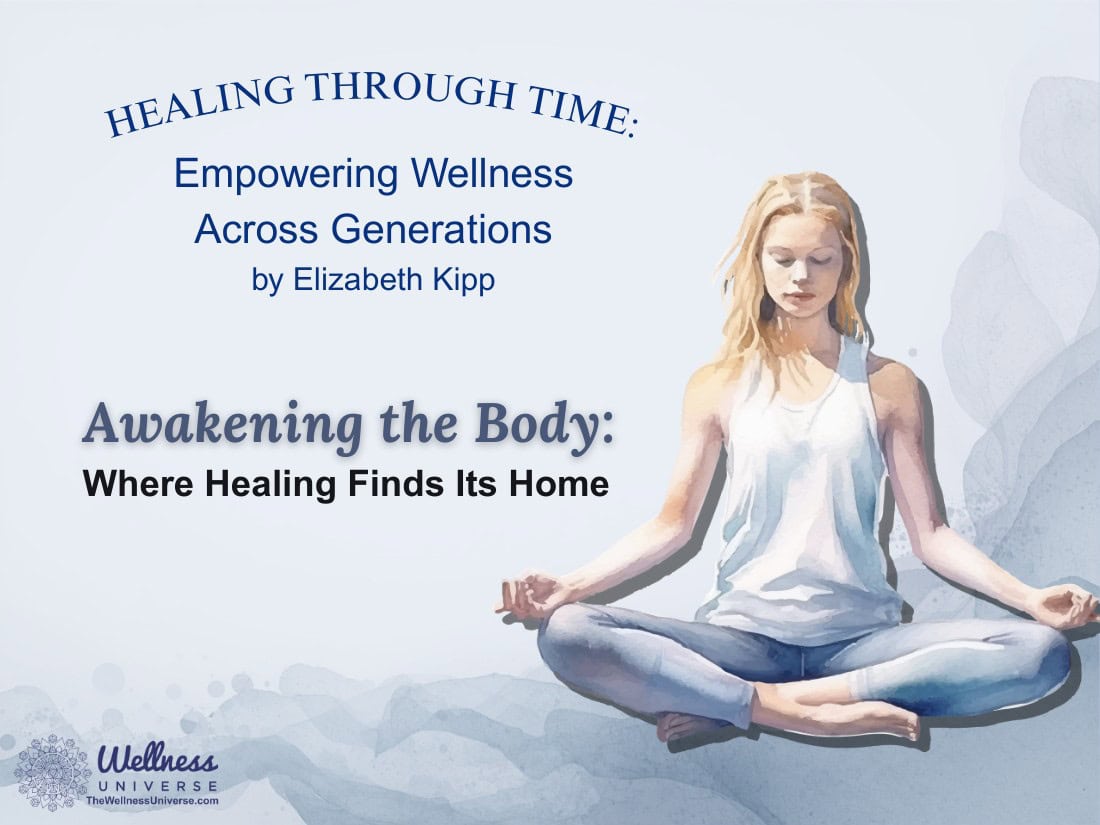
Embodied Awakening: Living the Legacy of Healing—January 2026
Healing is an integrative process, including the mind, body, and spirit.
Awareness awakens the mind, but embodiment anchors that awareness into lived reality. The body is where our stories – ancestral, personal, and collective – are written. It holds what we could not say, what our ancestors could not resolve, and what our spirits long to express.
As we step into a new year of embodied awakening, we enter a deeper conversation with the body, not as an object to manage or fix, but as a living archive of memory and liberation. The body is the home of healing, the temple where spirit and matter meet. When we learn to listen, it speaks the truth of our lineage and the wisdom of our becoming.
This month invites us to awaken the body not as something separate from consciousness but as the very ground of it. The journey of healing now becomes a journey of embodiment – of feeling, sensing, and living what we’ve reclaimed.
Teaching: The Body as Archive and Oracle
For decades, healing work has often focused on recognizing trauma, understanding patterns, and reclaiming agency. Recognizing this alone is only part of the process. The body must be involved in healing because it remembers what the mind forgets.
Every cell bears the imprint of lived experience. Epigenetic research now confirms what ancient traditions have long understood: unresolved stress and trauma can be passed down through generations, influencing biology, behavior, and even perception. Our nervous systems are not isolated; they are part of an ancestral continuum, carrying both the burdens and blessings of those who came before us.
When we discuss embodiment, we mean bringing conscious awareness into these layers of the body: into muscles that have tense for decades, into breath that has learned to hold itself, and into the subtle rhythms of the heart that may have become caught in a stress pattern.
In this stage of healing, our task is not to seek transcendence but presence. The goal is not to rise above the body but to return home to it, and to inhabit it with compassion, curiosity, and reverence. This is where liberation begins.
The Neuroscience of Embodiment
From a physiological perspective, embodiment is the integration of body and mind through the regulation of the nervous system. Trauma often creates disconnection, a split between awareness and sensation. This disconnection is protective at first, helping us survive overwhelming experiences. But as we heal, the body invites us to restore connection through safe, gradual reconnection with sensation.
Practices that enhance interoception, the awareness of internal bodily states, support this healing process. When we notice the heartbeat, feel the breath move through the ribs, or sense the ground beneath our feet, we activate neural pathways that promote safety and coherence in the body’s systems. Over time, this fosters resilience, self-regulation, and a grounded sense of presence.
The Spiritual Dimension
Spiritually, embodiment is how we bring our healing into form. It is how wisdom turns into action and insight into offering. The more we inhabit the body, the more we can invite the sacred into everyday life. Every breath becomes a prayer. Every movement becomes medicine. Every grounded moment becomes a contribution to the collective field of healing.
In many traditions, awakening is not about escaping the human form; it’s about fully embracing it. To awaken the body is to honor the divine intelligence that animates it. The body is not an obstacle to spirit; it is its expression.
Embodied Practice: Coming Home to the Body
This practice encourages a gentle reconnection with the body as both a memory and an ally. It can be practiced alone or in groups.
Duration: Ten–fifteen minutes
Setting: Find a quiet, comfortable space. Sit or stand in a way that makes you feel grounded.
1. Arrival
Begin by noticing your breath without changing it. Feel the natural rhythm of inhale and exhale. Let your awareness rest on the movement of the breath as it flows through you.
2. Grounding through contact
Focus on where your body touches the ground or chair. Notice sensations like weight, temperature, or texture. Feel gravity as a supportive force, like an embrace rather than a pull. Allow yourself to be supported.
3. Sensing the body’s story
Now gently scan your body, from crown to soles. Notice where there is ease, where there is tension, where there is absence of feeling. Each sensation is information, neither good nor bad, simply present.
As you notice, breathe into each area with curiosity:
“What are you showing me?”
“What do you need right now?”
4. Releasing and receiving
If you sense a place of holding, imagine exhaling gently into it, not forcing, just offering breath as kindness. As you inhale, imagine drawing in safety, warmth, or light. Feel how the body begins to respond in its own timing.
5. Integration
Place one hand on the heart and one on the lower belly. Feel their gentle rise and fall. Whisper inwardly:
I am home in my body. My body remembers how to heal.
Stay here for a few breaths, allowing this truth to settle.
6. Closing
When you’re ready, open your eyes. Notice how you feel – any shifts in temperature, sensation, or mood. Move slowly back into your day, carrying the awareness of your embodied self with you.
This simple yet profound practice retrains the nervous system to experience the body as a place of safety. Over time, this becomes the foundation for deeper healing, both personal and ancestral.
Reflective Prompts
Use these prompts to deepen integration and to guide discussion or journaling after the practice:
- What sensations arise when I bring attention to my body? How do I relate to those sensations—with curiosity, resistance, or compassion?
- In what ways might my body be carrying ancestral or familial stories? What happens when I listen rather than analyze?
- How does embodiment shift my understanding of healing—from something I think about to something I live through?
- Where in my body do I feel most at home? Where do I feel distant or disconnected?
- What practices or environments help me return to presence when I feel ungrounded?
You can revisit these prompts over time. As the body’s language becomes more familiar, the answers will evolve. Healing deepens as we learn to hear what the body has always known.
Awakening the body is an act of remembrance. We are remembering that healing is not separate from the flesh, the breath, or the heartbeat. It is woven into the very fabric of our being.
In embodying our healing, we honor our ancestors, not by carrying their pain, but by freeing it through presence. We become living expressions of what they longed for: safety, vitality, connection, and peace.
As we begin this new year, may we each take one conscious breath as a declaration:
I am willing to live what I’ve healed.
I am willing to awaken through my body.
I am home.
Connect with Elizabeth on The Wellness Universe and follow her on Facebook and Instagram.
Healing. Here. Now. Mindfulness, Trauma, and Recovery is a course for self-care and healing brought to you in partnership with Elizabeth Kipp, Founder of Elizabeth Kipp Stress Management, LLC and Wellness Universe Trauma Expert Leader exclusively for Wellness for All programming.
Catch the replay – https://bit.ly/HealingHereNow
A Transformational Journey Workshops
Unlock the full transformational journey with all 29 powerful workshops!

Blessing for Your Transformation
with Elizabeth Kipp
Step into a powerful journey of healing and renewal with a live reading of Blessing for Your Evolutionary Transformation from the #1 best-selling book series The Wellness Universe Guide to Complete Self-Care: 25 Tools for Transformation. Release what no longer serves you, reconnect with your inner strength, and rediscover your purpose with clarity and peace. Join live for an inspiring experience of growth, conversation, and transformation—you don’t want to miss it!
#1 BEST SELLER AVAILABLE NOW!
The Wellness Universe Guide to Complete Self-Care, 25 Tools for Transformation
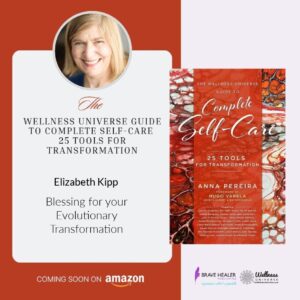
Ready for a gentle reset with real momentum? The Wellness Universe Guide to Complete Self-Care: 25 Tools for Transformation is a 5-star Amazon favorite, and readers say,
“This book should be your bedside table guidebook.”
Open to any page, choose a tool, and let one small shift become your next breakthrough.
Transforming Shame: Release for Relief
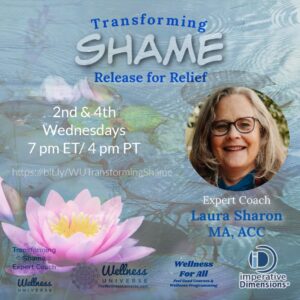
Shame can quietly shape our thoughts, relationships, and self-worth. Left unaddressed, it can hold us back from living with confidence, connection, and peace. This 6-month, 12-session live online course helps you understand shame, release its grip, and cultivate self-compassion through practical tools, mindfulness practices, and guided reflection.
Session 1 – What is Shame?
Learn to recognize shame, define it in your own words, and reflect on its presence in your life.
Enroll Now: https://bit.ly/WUTransformingShame
SoulTreat Retreat 2026
April 28 – May 1
Give yourself the gift of loving self-care. Come to SoulTreat!
Take me to SoulTreat

Elizabeth is a Health Facilitator, Empowerment Coach, EFT/Tapping and Ancestral Clearing Practitioner, and Kundalini Yoga Teacher, helping people to step into the power of their own healing. She has turned her attention as a patient advocate and health facilitator in service to the alarmingly high population of people who suffer from stress, chronic pain, and the quest for a life free from suffering.
Post Views: 8
Publisher: Source link