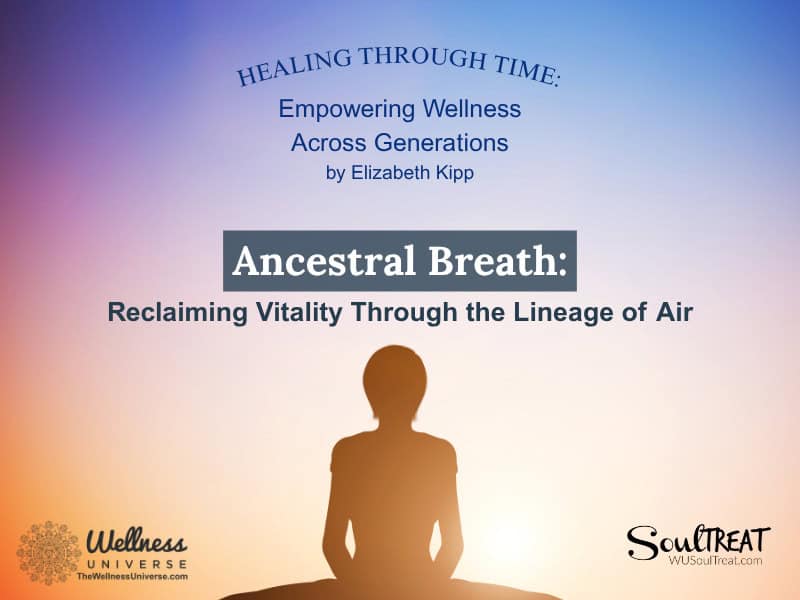
There is something profoundly simple and profoundly sacred about the breath.
It moves quietly through every moment of our lives. We breathe when we sleep. We breathe when we speak, move, grieve, or celebrate. Most of the time, we do not even notice it. Yet breath is the rhythm that sustains us from the first moment of life until the last.
In the journey of healing, breath becomes more than a biological process. It becomes a bridge, connecting body and mind, science and spirituality, the present moment and the wisdom carried through generations.
The larger theme guiding my exploration this year is Embodied Awakening: Living the Legacy of Healing.
Many people have spent years, or even decades, developing awareness around their personal and ancestral histories. They have begun to recognize the patterns that shaped their families, the beliefs that traveled through generations, and the ways unresolved trauma can echo through time.
Awareness is powerful. It opens the door to healing.
But healing eventually asks something more of us. It asks us to embody what we have learned—to live the wisdom that emerges when old patterns begin to release, and to transform insight into daily practice. Breath is one of the most accessible and powerful tools we have for doing exactly that.
Breath: The First Inheritance
The first thing we do when we enter this world is breathe. The last thing we do when we leave is release that breath. Between those two moments lies the story of a life.
Breathing is so natural that it often fades into the background of our awareness. Yet the way we breathe is deeply influenced by our experiences, especially stress and trauma.
When the nervous system perceives a threat, the breath changes. It becomes shallow and rapid. The chest tightens. The body prepares to respond to danger.
This response is not a flaw in our system. It is an elegant survival mechanism.
However, when stress becomes chronic, the body can remain in this heightened state for long periods. The breath becomes habitually constricted. The nervous system stays alert even when there is no immediate threat.
Over time, these patterns become deeply ingrained.
And sometimes, they are not entirely our own.
Research into intergenerational trauma suggests that the effects of stress and trauma can influence future generations through both biology and behavior. Studies of descendants of trauma survivors by Rachel Yehuda and her team at The Parsons Research Center for Psychedelic Healing at Icahn School of Medicine at Mount Sinai have shown measurable differences in stress hormones and resilience patterns across generations.
From a historical trauma perspective, this makes sense. Human beings do not exist in isolation. We are shaped by families, cultures, and events that occurred long before we were born.
The body carries memory—not only personal memory, but sometimes the echoes of collective experience.
The empowering truth is that these patterns are not fixed. They can shift. And one of the most direct pathways to that shift is the breath.
The Element of Air
Across cultures and spiritual traditions, breath is associated with the element of air.
Air represents movement, communication, and consciousness. It is invisible, yet essential. Without it, life cannot continue.
Every inhale brings oxygen into the bloodstream. Every exhale releases carbon dioxide. This exchange reflects the larger relationship between humans and the natural world. Plants absorb the carbon dioxide we release and return oxygen to the atmosphere, creating a continuous cycle of life.
Breathing reminds us that we are not separate from nature; we are participating in it with every breath. When we consciously engage with our breathing, we begin to reconnect with these natural rhythms.
This is why breathwork practices exist in cultures across the world – from yogic pranayama to contemplative prayer traditions to Indigenous ceremonial practices.
Long before neuroscience began studying the nervous system, many traditions understood something deeply intuitive:
Breathing regulates the body and mind.
Modern science now confirms that slow, intentional breathing stimulates the vagus nerve and activates the parasympathetic nervous system, the body’s natural “rest and restore” state.
When the nervous system shifts out of survival mode, healing processes become more accessible. Muscles soften. The mind becomes clearer. The body begins to restore balance.
Breath as a Bridge Across Generations
Breath also holds symbolic meaning in the context of ancestral healing. In many traditions, breath is associated with spirit, the animating force of life.
The air that fills our lungs today has moved through forests, oceans, mountains, and countless living beings throughout history. It has circulated through the bodies of those who came before us. This perspective reminds us that life itself is interconnected.
From an evolutionary point of view, we inherit information from previous generations that helps prepare us for the environments we are likely to encounter. This inheritance includes not only biological traits but also learned responses to stress and adversity.
When we consciously engage with the breath, we are doing more than calming the nervous system. We are creating a moment of awareness that allows us to choose how we respond to the patterns we have inherited.
Breath becomes a place where the past meets the present, and where the course of the future can be influenced.
The Neuroscience of Conscious Breathing
Breathwork is sometimes framed as a purely spiritual practice, but it is also deeply rooted in physiology.
Every breath sends signals to the brain.
Fast, shallow breathing tells the brain that the environment may be unsafe. The stress response activates. Adrenaline and cortisol increase. The body prepares for action.
Slow, steady breathing communicates the opposite message. It tells the nervous system that it is safe to relax.
When the breath lengthens and deepens, the vagus nerve becomes more active. Heart rate slows. Blood pressure stabilizes. The mind becomes more focused and calm.
These physiological changes support neuroplasticity—the brain’s ability to form new patterns.
In other words, conscious breathing can literally help retrain the nervous system.
For individuals carrying the effects of chronic stress, trauma, or ancestral patterns of vigilance, this practice can become a powerful pathway toward regulation. It gently teaches the body that it no longer has to live in a constant state of defense.
Reclaiming the Rhythm of Life
Many people move through daily life without realizing how restricted their breathing has become. Hours spent sitting at desks, looking at screens, or navigating stressful environments encourage shallow breathing patterns. Over time, this can create a subtle but persistent sense of fatigue or tension.
Reclaiming the breath begins with something simple: awareness.
Take a moment to notice your breathing right now.
- Is it shallow or deep?
- Does it move primarily in the chest or in the belly?
- Is it rushed or relaxed?
There is no need to judge the answer. Awareness itself is the first step toward change.
From there, gentle practices can begin to restore the natural rhythm of breathing.
A Simple Ancestral Breath Practice
This practice combines breath awareness with the intention of honoring both the past and the future.
- Find a comfortable position.
Sit or stand with your spine relaxed but upright. - Bring your attention to your breath.
Notice the natural rhythm of inhaling and exhaling. - Slow the breath slightly.
Inhale through the nose for a count of four.
Exhale through the mouth for a count of six. - As you inhale, imagine drawing in support.
You may think of the strength of your ancestors, the wisdom of nature, or the resilience that has carried your lineage forward. - As you exhale, release tension.
Let go of patterns that no longer serve your well-being. - Continue for several minutes.
This practice is not about perfection. It is about creating a moment of conscious connection—with your body, your breath, and the larger web of life that supports you.
Living the Legacy of Healing
Ancestral healing is not only about releasing the burdens of the past.
It is also about recognizing the gifts that have traveled through the lineage.
Resilience. Creativity. Courage. Adaptability.
Every generation carries forward both challenges and strengths.
When we learn to regulate our nervous systems, cultivate awareness, and respond to stress with greater presence, we begin to transform the patterns that move through the family line. In doing so, we participate in a quiet but powerful act of healing.
The breath becomes the place where this transformation begins. Each inhale invites vitality. Each exhale releases what is no longer needed.
And in the simple rhythm of breathing, we remember something essential: healing is not only something we understand. It is something we live.
One breath at a time.
Connect with Elizabeth on The Wellness Universe and follow her on Facebook and Instagram.
Healing. Here. Now. Mindfulness, Trauma, and Recovery is a course for self-care and healing brought to you in partnership with Elizabeth Kipp, Founder of Elizabeth Kipp Stress Management, LLC and Wellness Universe Trauma Expert Leader exclusively for Wellness for All programming.
Catch the replay – https://bit.ly/HealingHereNow
A Transformational Journey Workshops
Unlock the full transformational journey with all 29 powerful workshops!

Blessing for Your Transformation
with Elizabeth Kipp
Step into a powerful journey of healing and renewal with a live reading of Blessing for Your Evolutionary Transformation from the #1 best-selling book series The Wellness Universe Guide to Complete Self-Care: 25 Tools for Transformation. Release what no longer serves you, reconnect with your inner strength, and rediscover your purpose with clarity and peace. Join live for an inspiring experience of growth, conversation, and transformation—you don’t want to miss it!
#1 BEST SELLER AVAILABLE NOW!
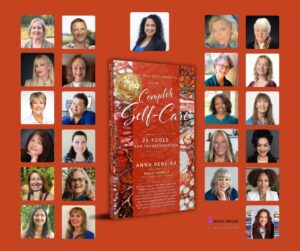
The Wellness Universe Guide to Complete Self-Care, 25 Tools for Transformation
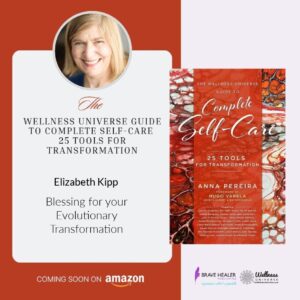
Ready for a gentle reset with real momentum? The Wellness Universe Guide to Complete Self-Care: 25 Tools for Transformation is a 5-star Amazon favorite, and readers say,
“This book should be your bedside table guidebook.”
Open to any page, choose a tool, and let one small shift become your next breakthrough.
SoulTreat Retreat 2026
April 28 – May 1
Give yourself the gift of loving self-care. Come to SoulTreat!
Take me to SoulTreat

Elizabeth is a Health Facilitator, Empowerment Coach, EFT/Tapping and Ancestral Clearing Practitioner, and Kundalini Yoga Teacher, helping people to step into the power of their own healing. She has turned her attention as a patient advocate and health facilitator in service to the alarmingly high population of people who suffer from stress, chronic pain, and the quest for a life free from suffering.
Post Views: 11
Publisher: Source link